

Is Rust On The Brake Rotors Dangerous?
March 27, 2026
Rust on brake rotors looks alarming because it screams neglect, even when the car is actually fine. The truth is rotor rust is common, and most of the time it clears quickly once the brakes are used. The real question is whether you are seeing harmless surface rust or rust that has started changing how the brakes work.
Here is how to tell which one you are dealing with.
Why Rotor Rust Shows Up So Fast
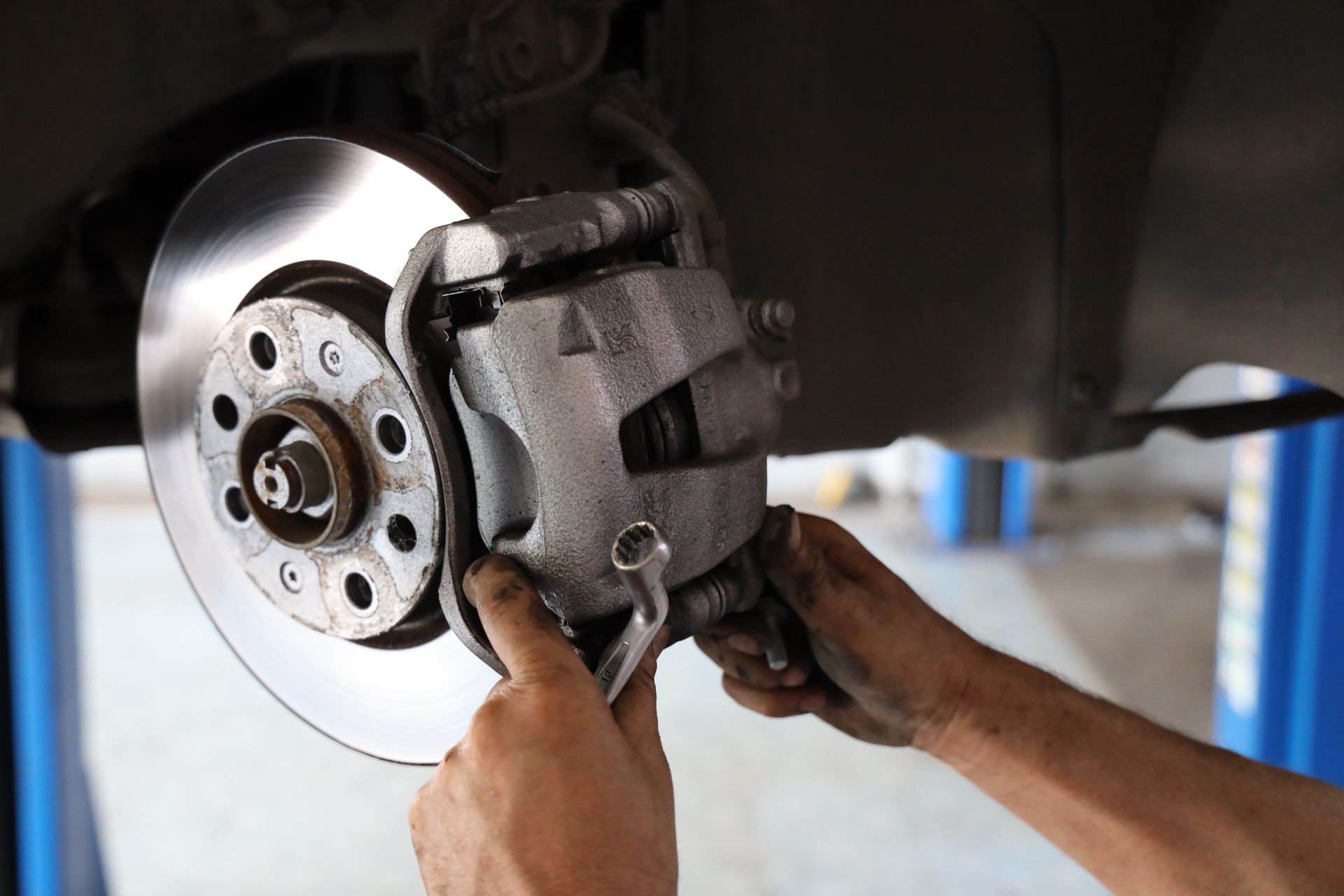
Brake rotors are bare metal, so they react to moisture and air immediately. After rain, humidity, or even a damp night, a thin orange film can form within hours. If the car sits for a couple of days, the rust can look heavier because nothing is wiping it off.
In many cases, the first few stops scrape that film away and the rotors look normal again. That is why rust can look dramatic in the driveway, then seem to disappear after one short drive.
When Rust Is Usually Harmless
If the rust is a light, even coating and the brakes feel normal, it is typically just surface rust. You might hear a faint scrape on the first stop or two, especially in the morning. The sound usually fades quickly once the pads have cleaned the rotor face.
This is especially common if the vehicle sits for long periods or only takes short trips. As long as the braking is consistent and the noise clears fast, that kind of rust is more of a nuisance than a danger.
When Rust Becomes A Real Problem
Rust becomes an issue when it stays, builds, or creates uneven rotor surfaces. Deep rust can form in areas the pads do not contact well, like the outer edge of the rotor or the inner face on some setups. Over time, that can lead to pulsation, longer stopping distances, or a brake pedal that feels uneven.
Another red flag is pitting or flaking, where the rotor surface is no longer smooth enough for the pad to grip evenly. If the car shudders when braking, pulls to one side, or makes grinding noises that do not go away after a few stops, it is time to treat it as more than surface rust.
What We Check To Decide If It Is Safe
A proper brake check looks at more than the rotor face you can see through the wheel. We measure pad thickness, look at both sides of the rotor, and check whether wear is even across the axle. We also check caliper slide movement, because a sticking caliper can leave part of the rotor rusted while another part is overheating.
One quick inspection can usually tell whether the rust will clean up with normal driving or whether the rotor surface is damaged. We also look for related issues like glazed pads, uneven contact patterns, and hardware that is not letting the pads retract properly.
Quick Checks You Can Do Before Scheduling Service
If you want to get a better read at home, start by noticing what happens after a short drive. If the scraping sound clears and braking feels steady, you are likely seeing surface rust. If the sound stays, braking feels rough, or the steering wheel shakes during stops, you may be dealing with a rotor surface issue.
These simple checks help narrow it down:
- Listen for scraping that lasts more than a few stops
- Notice if braking feels smooth or if the pedal pulses
- Pay attention to pulling left or right while braking
- Look for heavy scaling on the rotor edges, not just color on the face
If you have to slam the brakes to try to clean them up, do not. Hard stops are not a safe test method, and they can make other brake issues worse.
How To Prevent Rusty Rotors
Driving the car regularly helps because the pads keep the rotor face clean. If the vehicle sits, expect light rust, and focus on whether it clears quickly. Keeping the brakes in good condition also matters, since pads that are worn unevenly or calipers that drag can make rust patterns worse.
This is one of those areas where regular maintenance pays off quietly. A simple plan that includes periodic brake checks and timely pad replacement helps keep rotor surfaces healthier and reduces the chances of rust turning into pitting.
Get Brake Rotor Service In Multiple Locations In HI, With LexBrodies
If your rotors look rusty and you are not sure whether it is normal surface rust or something that needs attention, LexBrodies, with multiple locations in Hawaii, can check the full brake setup and tell you what is safe to drive on. We will look at pad wear, rotor condition, and caliper movement, then give you a clear plan for what to fix now versus what can wait.
Book a visit and get back to quiet, confident braking.