

Why Does My Engine Overheat Only When I Am Stopped?
November 27, 2026
The temperature gauge stays in its normal spot while you drive, so you stop worrying about it. Then traffic slows, you sit through two long lights, and the needle begins moving toward hot. As soon as you get going again, it drops. The engine has not suddenly fixed itself; the operating conditions have changed.
The difference between moving and standing still is the first clue.
Why the Engine Overheats in Traffic but Not While Driving
Your engine creates heat whether you’re moving or parked with the engine running. Coolant carries that heat to the radiator, where air passing through the fins helps release it. At road speed, the vehicle pushes a steady stream of air through the front grille. At a stop, that natural airflow almost disappears.
The cooling fan has to make up the difference. If the fan isn’t moving enough air, the engine temperature rises in traffic but settles down once the car is moving again. That’s why overheating that only happens at idle points us toward airflow problems early in the inspection. It doesn’t mean the fan is automatically bad, but it gives us something specific to test.
Cooling Fan Failure and Engine Overheating at Idle
Many modern vehicles use electric radiator fans. Depending on the design, the fan runs at different speeds based on coolant temperature, air conditioning demand, and commands from the engine computer. The fan motor, relays, fuses, wiring, and control module all need to work together. A failure anywhere in that circuit stops the fan from responding correctly.
Some failures are less obvious than a fan that never spins. The fan sometimes runs at low speed but stops responding when the computer requests higher speed. Others work when cold, then stop after the motor or electrical connection heats up. The driver notices the problem during a slow drive-through line or while waiting for someone with the A/C on. We check fan commands and actual operation instead of assuming that seeing the blades turn means the whole system is working.
When the engine starts heating up at a stoplight, take note of these details:
- Whether the A/C was switched on
- Whether the radiator fan started running
- How fast the temperature gauge climbed
- Whether the heater continued blowing warm air
- Whether the temperature dropped after you started moving
Those details help us reproduce the conditions instead of waiting for the gauge to rise by chance.
Blocked Radiator Airflow and Fan Shroud Problems
Even with a functioning fan, air still needs a clear path through the condenser and radiator. Leaves, road debris, dirt, bent fins, and damaged plastic shrouds reduce airflow. After years on the road, debris builds up between the A/C condenser and radiator, and you can't see it from the grille.
A missing fan shroud deserves attention because it helps pull air through the radiator rather than around it. On vehicles with an engine-driven fan, a weak fan clutch creates a similar stop-and-go overheating pattern. At speed, everything appears fine. Slow down, and the system no longer pulls enough air through the cooling stack.
Low Coolant and Air Pockets in the Cooling System
When the coolant level is low, the engine has less room for error as heat builds. Coolant leaking from the hoses, water pump, radiator, or reservoir gradually lowers the level, sometimes without leaving a puddle. Some leaks evaporate on hot surfaces, so drivers notice a faint sweet smell before they see anything on the ground.
Air trapped in the cooling system after repairs or a leak can interfere with circulation and create hot spots. Drivers notice sudden gauge movement, inconsistent cabin heat, or temperature rising faster than expected. Topping off the reservoir won't repair the leak. Opening the pressurized coolant cap while the engine is hot puts you at risk of serious burns. Coolant level and pressure need to be checked after the system has cooled.
Thermostat, Water Pump, and Radiator Overheating Problems
Poor circulation from the water pump, a sticking thermostat, or a restricted radiator leaves the cooling system unable to remove heat efficiently. Those problems don't always create an identical symptom on every vehicle. A water pump with a damaged impeller struggles to circulate coolant under some conditions, while a thermostat that opens late allows temperature to rise farther than it should.
The A/C puts an extra heat load in front of the radiator. If overheating worsens whenever the air conditioning is on, we pay close attention to fan operation and airflow through the condenser. We look at coolant circulation, hose temperatures, and signs of past overheating.
What to Do When the Engine Temperature Gauge Rises
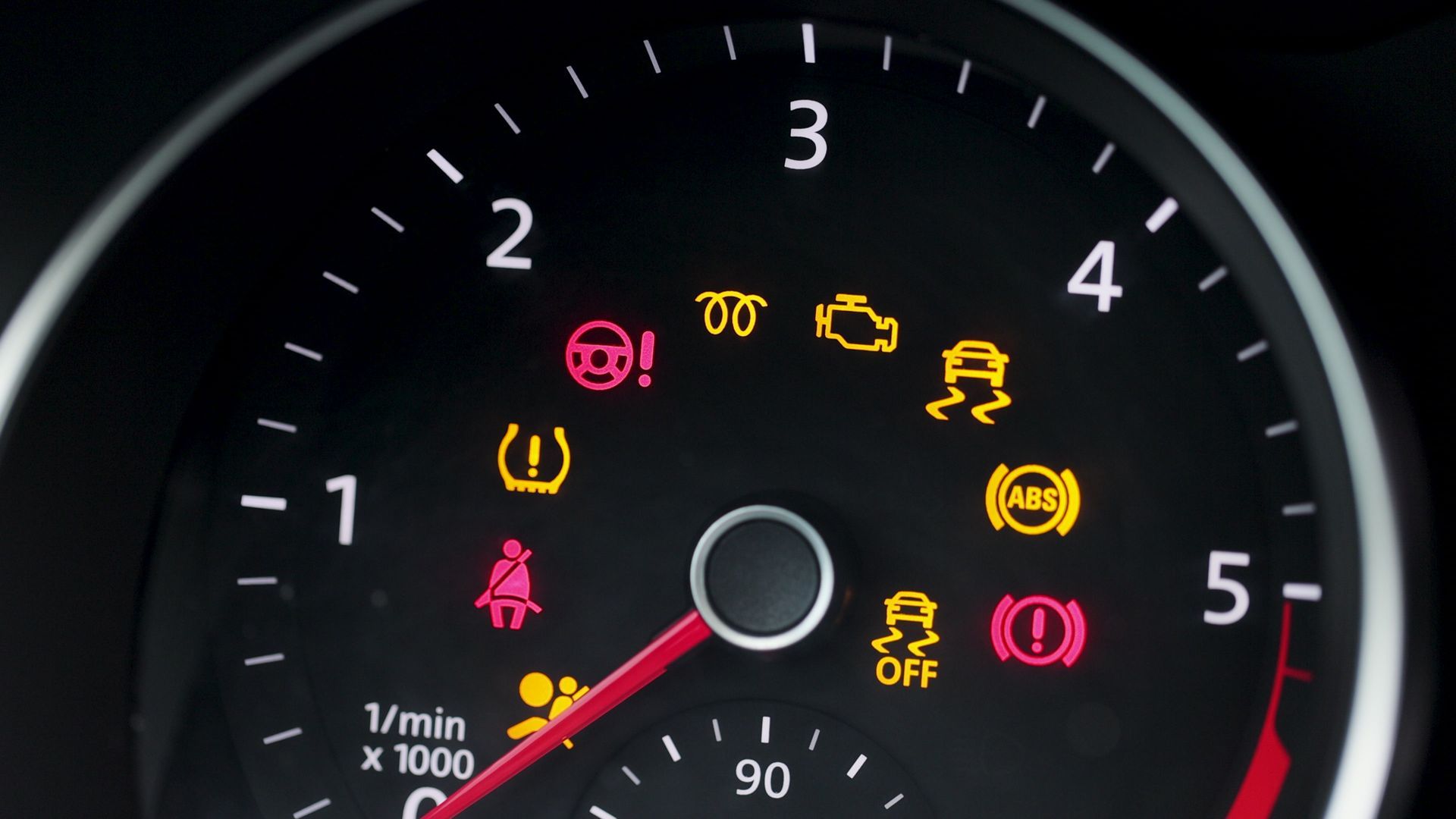
If the gauge moves toward the hot zone while you're stopped, turn the A/C off and watch the warning indicators. If traffic allows, move somewhere safe to stop. A heater set to hot can sometimes remove a little engine heat temporarily, but it's not a repair, and it shouldn't be used to justify continued driving with an overheating engine.
If the warning light comes on, steam appears, or the gauge reaches the red zone, shut the engine off as soon as it is safe. Don't remove the radiator or coolant reservoir cap while it's hot. Severe overheating puts the head gasket and cylinder head at risk and turns a cooling system repair into a much larger engine job if the temperature stays high. A tow is cheaper than gambling on one more mile with the temperature climbing.
How Our Technicians Test Cooling Fan and Radiator Operation
We check coolant level and visible leaks, then monitor actual engine temperature as the vehicle warms up. With the A/C running and the engine at idle, we check fan speed and airflow. Electrical testing helps separate a failed motor from a missing command or poor connection.
From there, a cooling system pressure test, radiator inspection, thermostat checks, and circulation testing help narrow the cause. We want to know whether the engine is making too much heat, losing coolant, or simply unable to release heat while stationary.
Get Engine Overheating Repair in Hawaii With LexBrodies
If your engine runs hot at stoplights, LexBrodies in Hawaii will check radiator airflow, cooling fan operation, and coolant circulation at our convenient service locations.